
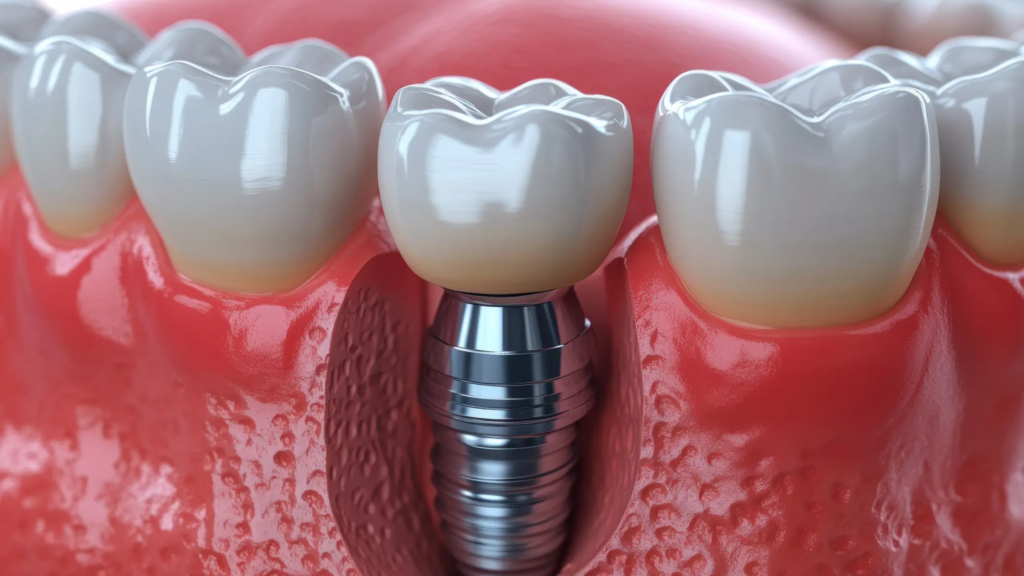
This is the question Dr. Doshi gets asked more than any other, and it deserves an honest answer rather than a reassuring one.
Short answer: No, not during the procedure, and less than most patients expect during recovery.
Long answer: there’s a meaningful difference between pain and sensation, between during and after, and between standard recovery and complications. This guide walks through each one honestly, so you know exactly what to expect, not what we’d like you to expect.
The fear of pain stops more people from getting implants than the cost, the time, or the procedure itself. It’s a fear worth addressing directly.
During the Procedure: What You’ll Actually Feel
The procedure is performed under one of four anesthesia options, depending on the case and your preference.
Local Anesthesia Only
The area around the implant site is fully numb. You’re awake and aware, but you cannot feel pain at the surgical site. You may feel:
- Pressure when the dentist applies force to drill the implant pilot hole or thread the implant in. This is not pain; it’s the same sensation as a strong hand pressing on your jaw.
- Vibration from the surgical handpiece, similar to what you’ve felt at routine dental cleanings or fillings.
- Sounds the drill makes noise, and the noise itself can feel uncomfortable even when there’s no physical pain. Many patients use noise-canceling headphones during the procedure for this reason.
What you will not feel:
- The incision (you won’t feel the gum being opened)
- The drilling into bone (no nerve endings in bone past the initial layer)
- The implant is being placed
- The sutures are going in
For most single-implant cases in healthy patients, local anesthesia alone is adequate. About 60% of our single-implant patients choose this option.
Nitrous Oxide (Laughing Gas) Plus Local
Nitrous oxide is breathed through a small nose mask throughout the procedure. It produces a relaxed, slightly euphoric feeling without putting you to sleep. You remain aware and can respond to questions, but you feel detached from the procedure.
Nitrous wears off within 5 minutes of the mask being removed. You can drive yourself home. Cost: $50–$100, often included or close to it.
Good fit for: patients with mild-to-moderate dental anxiety who don’t want full sedation but want more comfort than local alone
Oral Conscious Sedation
A pill (typically a benzodiazepine like Halcion) is taken about an hour before the procedure. By the time you arrive, you’re deeply relaxed and drowsy. You’re still technically awake and responsive, but most patients remember little to none of the procedure afterward.
You’ll need a driver to and from the appointment. The effects wear off over 4–6 hours. Cost: $200–$300.
Good fit for: patients with moderate-to-significant dental anxiety, longer single-implant cases, or patients who simply prefer not to remember the experience.
IV Sedation
Medication is administered through an IV during the procedure. You enter a deeply relaxed, sleep-like state and have no awareness of what’s happening. You can still breathe on your own and respond to commands, but most patients have no memory of the procedure at all.
You’ll need a driver and someone to stay with you for several hours afterward. The effects wear off over 4–8 hours. Cost: $400–$800.
Recommended for: All-on-4 surgical days (the procedure is long enough that local alone isn’t practical for most patients), full-mouth cases, anxious patients, gag-reflex problems, and patients who simply want zero memory of the procedure.
Learn more about all sedation options on our sedation dentistry page.
What About General Anesthesia?
True general anesthesia (where you’re fully unconscious and on a ventilator) is rarely used for dental implants. It’s reserved for very complex cases or specific medical situations and requires a hospital or surgical center setting. IV sedation is sufficient for essentially all routine implant procedures, including All-on-4.
What About After the Procedure?
This is where the honest answer matters most. The procedure itself doesn’t hurt, but the next 3–7 days involve real recovery.
The First 24 Hours
You’ll have a numb feeling in the area for 2–6 hours after the procedure as the local anesthesia wears off. As it fades, you’ll begin to feel:
- Mild-to-moderate ache at the surgical site, comparable to a sore muscle after exercise, not a sharp pain
- Pressure or tightness in the jaw if multiple implants were placed
- Some swelling that peaks at 48–72 hours
- Possibly some bruising on the cheek if the implant is in a posterior position
- Slight oozing of blood-tinged saliva for a few hours, which is normal
You’ll have been given prescription pain medication (typically 5–10 pills of a moderate strength). Most single-implant patients use 2–4 of them and switch to over-the-counter Tylenol/Advil after.
What to do in the first 24 hours:
Days 2–4
Discomfort and swelling peak around 48–72 hours, then begin to decline. Most patients are managing on over-the-counter pain relief by day 3.
You can usually return to non-physical work by day 2 or 3 for a single implant. Office work, computer-based jobs, and most desk roles are fine. Physical jobs, exercise, and heavy exertion should wait until day 7+.
Foods can progress to room-temperature or warm soft items, such as soup (not hot), eggs, fish, and pasta. Continue avoiding the surgical site directly.
Days 5–10
Most pain is gone or minimal by day 5. Some patients describe a “weird sensation” rather than pain awareness that something is different in the area, but not discomfort. This typically fades by day 10.
The follow-up visit happens around day 7–10. The dentist removes any sutures (if non-dissolving sutures were used), checks healing, and gives you the green light for normal eating away from the implant site.
Weeks 2–6
Eating returns to roughly normal, with the surgical site gradually allowed firmer foods. Most patients forget they had surgery by week 3 or 4. The implant continues healing underneath the gum throughout the 3–6 month osseointegration period, but you don’t feel this.
How Does This Compare to Other Things You’ve Experienced?
Honest comparisons based on what patients tell us:
- Easier than: wisdom tooth extraction (especially impacted ones), root canals on infected teeth, gum surgery
- Similar to: routine tooth extraction, deep cleaning under local anesthesia, scaling, and root planing
- More than: routine filling, simple crown, dental cleaning
Most patients who’ve had wisdom teeth out say a single-implant recovery is noticeably easier with less swelling, less time off, and faster return to eating.
For All-on-4 Specifically
The recovery from All-on-4 is more involved than from a single implant because more is happening: extractions of remaining teeth, placement of 4 implants, attachment of a temporary bridge, all in one day. But it’s also typically performed under IV sedation, which means you’re not aware of any of it.
The All-on-4 Recovery Timeline
| Period | What to Expect |
|---|---|
| Day 1 (surgical day) | At home recovering. Significant numbness wears off over 4–6 hours. Prescription pain medication for the first 24–48 hours. |
| Days 2–4 | Discomfort and swelling peak. Soft-food diet (smoothies, yogurt, eggs, soup). Discomfort is typically described as “manageable with medication.” |
| Days 5–7 | Discomfort declining significantly. Most patients are ready to return to non-physical work. |
| Weeks 2–4 | Eating with the temporary bridge gets progressively easier. Soft-to-medium foods. Avoid hard, crunchy items. |
| Weeks 4–8 | Most patients are eating a near-normal diet with the temporary bridge. |
| Months 3–6 | Final permanent zirconia bridge placed. Eating returns to full normal: steak, apples, and corn on the cob. |
The honest reality: All-on-4 recovery is more demanding than a single implant. Patients who’ve had both consistently describe All-on-4 as comparable to “having all your wisdom teeth out at once” in terms of recovery, significant for several days, then gradually improving.
Pain Management: What You’ll Be Given
A standard post-implant pain management protocol at SmileOn includes:
- Prescription pain medication typically includes 5–10 pills of a moderate-strength medication (Norco, Ultram, or similar). Used for the first 24–48 hours, then tapered.
- Anti-inflammatory Ibuprofen 600–800mg every 6–8 hours, alternated with Tylenol if needed
- Antibiotic to prevent infection during healing (typically 7–10 days)
- Antibacterial mouth rinse chlorhexidine, used twice daily for 7–14 days
- An ice pack for the first 48 hours to reduce swelling
The vast majority of patients use the prescription pain medication for less than 2 days. Some don’t use it at all and manage with over-the-counter options.
If you have a history of opioid sensitivity or prefer not to use prescription pain medication, alternative protocols using extended-release Tylenol and prescription-strength NSAIDs are usually sufficient. Tell us at the consultation if this is important to you.
What If It Hurts More Than Expected?
Three scenarios where post-implant pain could exceed normal expectations:
Persistent Pain Past Day 5
Some discomfort lingering into the second week is normal. Significant pain, worse than day 2, sharp, or worsening, is not. This is uncommon (under 5% of cases) and usually signals one of:
- An infection develops at the site
- The implant is not integrating properly with the bone
- A sinus issue (for upper implants)
- Damage to a nearby nerve (rare with 3D-guided surgery)
If you’re experiencing pain that’s worsening rather than improving, call us. Same-day evaluation is available at all three locations: Arlington Dental Lounge, 360 Dental Lounge in Mansfield, and Irving Family Dental in Irving.
Sudden Pain After a Comfortable Period
This pattern feels fine for days, then a sudden onset of new pain usually indicates a developing complication: an infection, a piece of food lodged in the surgical site, or a healing cap issue. Call us. Don’t wait.
Long-Term Sensitivity
A few patients experience occasional sensitivity around an implant for weeks after the final restoration. This often resolves on its own as the gum and bone fully mature around the implant. Sensitivity that persists past 6 weeks or that becomes painful should be evaluated.
In all three scenarios, early intervention is significantly easier than waiting. We’d rather see you for a quick check that turns out to be nothing than wait and have it become something.
For Patients With Dental Anxiety
Dental anxiety is the reason many patients put off treatment for years. If this is you, a few things worth knowing:
Anxiety Doesn’t Disqualify You
It’s the most common reason patients choose IV sedation, and it’s a completely reasonable reason. No judgment, no second-guessing.
Tell Us at the Consultation
When you book the consultation, tell us you have dental anxiety. We’ll plan the appointment differently with more time, a slower pace, more explanation as we go, and the option to take breaks. Many anxious patients find that the consultation itself is the hardest part, and the procedure is easier than they feared.
Specific Accommodations Available
- Noise-canceling headphones during the procedure
- Anti-anxiety medication (a small dose of Halcion taken an hour before the consultation, if you need it just to walk in the door)
- Treatment broken into shorter, separate visits if a longer single visit is too much
- The option to bring a support person to wait with you
These accommodations are available at all three of our DFW locations. Patients near Mansfield can speak with the 360 Dental Lounge team, those in Irving with Irving Family Dental, and those in Arlington with Arlington Dental Lounge directly about their anxiety before booking.
What Patients With Severe Anxiety Tell Us Afterward
The consistent feedback: “I waited 10 years to do this because I was so afraid, and it turned out to be nothing like what I’d built it up to be in my head.” Sedation works. Local anesthesia works. The procedure is shorter than the wait in the lobby. The fear is almost always larger than the reality.
How Dr. Doshi Minimizes Discomfort
A few specific things SmileOn does that affect comfort:
3D-Guided Surgery
Pre-surgical 3D CT scans let us plan implant placement with millimeter precision. This means smaller incisions, more accurate drilling, no exploratory adjustment during surgery, and faster procedures. Faster procedures mean less tissue trauma and less post-op discomfort.
Atraumatic Technique
The instruments and protocols used minimize tissue damage during placement. Drills are precise, irrigation is constant (keeping bone temperature low), and the implants used are designed for primary stability with minimal bone removal.
Fellowship-Trained Experience
Dr. Doshi has placed 5,000+ implants. The procedure is muscle memory at this point. Inexperienced operators take longer, make more adjustments, and create more trauma. Time and technique are major factors in how comfortable recovery is. You can meet the team across our three DFW locations before you commit to anything.
Comprehensive Pre-Procedure Planning
Every implant is mapped out in advance with exact position, angle, and depth. No surprises mid-procedure. No “let me see if this works” attempts. This consistency translates directly to better outcomes and smoother recoveries.
Frequently Asked Questions
Will I feel the implant being placed in the bone? No. The bone has no nerve endings beyond the very outer layer (which is fully anesthetized). You may feel pressure or hear the drill, but you cannot feel pain at the implant site.
How long does the numbness last after local anesthesia? Typically 2–6 hours after a single-implant procedure. The lower jaw stays numb longer than the upper because the nerves are more concentrated. You’ll be able to talk and drink, but eating is difficult until the numbness wears off and is not advised, as you can bite your cheek without realizing.
How long is the surgical visit? For a single implant: 60–90 minutes total, including setup and recovery. The actual surgical portion is 30–45 minutes. For All-on-4: 3–5 hours surgical time, plus setup and recovery.
Can I work the next day? For a single implant, most patients return to non-physical work the next day or the day after. For All-on-4, plan for 3–5 days off before returning to most work.
Will my face be swollen? Mild-to-moderate swelling is normal for the first 48–72 hours, especially for All-on-4 or implants in the back of the mouth. Most patients are comfortable being seen in public by day 4–5. Ice application during the first 48 hours significantly reduces the peak swelling.
Can I eat normally? Cold, soft foods for the first 24 hours. Soft foods for the first 1–2 weeks. Normal eating away from the implant site by week 2–3. Direct chewing on the implant site waits until the final crown is placed (3–6 months later).
Will I be able to brush my teeth? Yes, gently away from the surgical site for the first 7 days. Use the prescribed antibacterial mouthwash for cleaning the surgical area during this time. Normal brushing resumes around week 2. Our preventive dentistry team will walk you through the exact protocol at your procedure visit.
Is there a risk of nerve damage? Permanent nerve damage from dental implants is very rare (under 1% of cases) when 3D-guided surgery is used. Temporary nerve sensation (numbness or tingling that resolves over weeks to months) is more common but still uncommon. Pre-surgical CT planning is what prevents most nerve issues.
What if I’m afraid of needles? A topical numbing gel is applied before any injection. The needle used for dental anesthesia is among the smallest used in medicine. Most needle-phobic patients are surprised by how little they feel. If even this is too much, oral sedation or IV sedation can be used to handle the needle phobia before the dental work begins.
Is the All-on-4 surgical day really painful afterward? It’s the most demanding implant recovery, but is typically described as 5–7/10 discomfort for the first 2–3 days, then declining. Most patients say it was easier than they expected, particularly given that they walked out the same day with a full set of teeth. Browse our smile gallery to see what patients look and feel like after recovery.
What does the financing look like if I’m ready to move forward? Single implants from $4,000–$6,500, All-on-4 from $24,000 per arch, both available with flexible financing from $299/month with $0 down through CareCredit, Cherry, Sunbit, and LendingClub. Our teams at all three locations can pre-qualify you in 5 minutes during the consultation.
Schedule a Consultation to Discuss Your Comfort Plan
If pain is your main concern about implants, the consultation is the place to address it specifically. Dr. Doshi will walk through the anesthesia options, discuss what’s right for your specific case, and answer any questions about comfort honestly.
The consultation itself involves no needles, no drilling, no procedure, just an exam, a 3D scan, and a conversation.
Call (682) 563-5663 or schedule online at the location nearest you:
- Mansfield: 360 Dental Lounge
- Arlington: Arlington Dental Lounge
- Irving: Irving Family Dental
Consultation is complimentary for new patients. Treatment plan recommendations require diagnostic evaluation, including imaging. Not applicable to patients with active, untreated periodontal disease. Cannot be combined with insurance. Subject to clinical eligibility.