
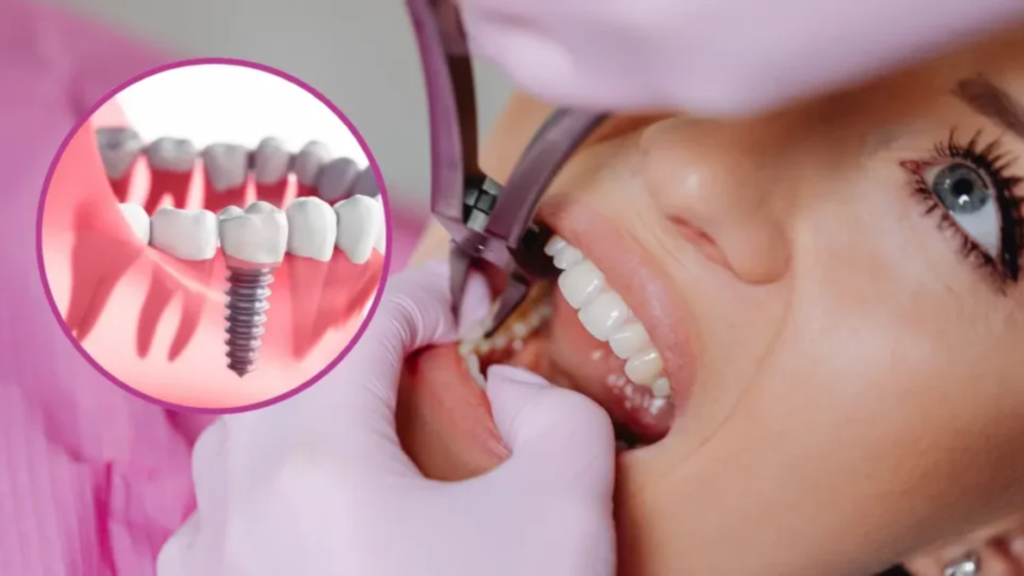
The question “are dental implants worth it?” usually doesn’t get an honest answer because the people best positioned to answer it sell implants for a living. So here’s an honest attempt, written by a fellowship-trained implant specialist who has placed 5,000+ implants and routinely advises patients against implants when they’re not the right fit.
Short version: for the right patient, yes, dental implants are one of the highest-value medical investments available. For the wrong patient, they’re an expensive procedure that doesn’t pay back. This guide will help you figure out which one you are.
What Dental Implants Actually Cost in 2026
Let’s start with the number, because that’s where the worth-it question begins. Here’s what implants cost at SmileOn Dental Implants in DFW in 2026:
| Treatment | Cost |
|---|---|
| Single dental implant (post + abutment + zirconia crown) | $4,000* – $6,500* |
| All-on-4 full arch (4 implants + permanent zirconia bridge) | $24,000* |
| Snap-on implant denture (4 implants + removable overdenture) | $9,000* |
| Bone grafting (when needed) | $300* – $3,000* |
| IV sedation (optional) | $400* – $800* |
For comparison, the national average in 2026:
- Single implant: $3,500* – $6,000*
- All-on-4: $20,000* – $35,000* per arch
- Full-mouth (both arches): $40,000* – $70,000*
Insurance typically covers 0–20% of implant procedures. HSA and FSA funds can be applied to. Financing through CareCredit, Cherry, Sunbit, or LendingClub typically runs from $299/month with $0 down and 5-minute approvals, making a $5,500 implant the rough equivalent of a moderate phone bill or internet plan over 18–24 months.
That’s the cost. Now let’s talk about what you get for it.
What You Actually Get for the Money
There are five distinct benefits, and each one independently justifies the cost for many patients.
1. The Implant Lasts 20+ Years, Often a Lifetime
A well-placed dental implant has a 95–97% success rate at 10 years (Dr. Doshi’s documented rate is 97%). The titanium post integrates with your jawbone and typically remains functional for the rest of your life. The crown on top may need replacement once during your lifetime (~$1,500–$2,500).
Compare that to:
- A dental bridge: 10–15 years average lifespan, often requires full replacement
- A traditional denture: 5–10 years, requires relines every 1–2 years
Over a 30-year horizon, the implant has the lowest replacement frequency of any tooth-replacement option. That’s part of the math people miss when comparing the upfront sticker prices.
2. Your Jawbone Stays Healthy
This is the benefit most patients don’t fully appreciate until 10 years after they’ve made the decision.
When you lose a tooth, the bone underneath begins to shrink 25% in the first year alone, with continued loss every year after. This is your body reabsorbing the bone for use elsewhere, because the tooth root is no longer stimulating it.
A dental implant stimulates the bone the same way a natural root does. Bone loss stops. The jaw stays strong. The facial structure stays intact.
What does that mean in practical terms? It means:
- Your face shape doesn’t collapse over time
- Adjacent teeth don’t shift into the gap (which they will do otherwise, often requiring expensive orthodontic correction later)
- Future dental work, if needed, isn’t compromised by bone loss
- The “aged” look that long-term denture and bridge wearers often develop doesn’t happen
For someone in their 40s, 50s, or 60s, this benefit alone often justifies the cost. Our implant and prosthetic dentistry team at Arlington Dental Lounge and the 360 Dental Lounge team in Mansfield can show you 3D imaging of your own bone density at the consultation.
3. You Can Eat Normally, Including Foods You’ve Forgotten About
An implant restores roughly 90% of natural bite force. Practically:
- Steak, ribs, crusty bread, raw apples, and corn on the cob are all back on the menu
- No worry about something dislodging mid-meal
- No restriction during business meals, dinner parties, or family gatherings
- Diet stays varied, which has measurable downstream health effects
Patients who switch from dentures to implants almost universally describe the eating change as transformative. Patients who skip a tooth replacement entirely often don’t realize how much they’ve adapted around the gap until it’s no longer there.
4. Adjacent Teeth Stay Healthy
Two things happen when a tooth is lost and not replaced (or replaced with a bridge):
With no replacement, the teeth on either side begin to tilt into the gap. The opposing tooth in the other jaw begins to over-erupt (it grows toward the gap because there’s no contact). Within a few years, you’ve got bite problems that often require expensive corrective work.
With a bridge, the two adjacent teeth get ground down so the bridge crowns can fit. About 10–20% of those prepared teeth will eventually need root canals from the trauma of the preparation. You’ve now compromised three teeth instead of one. Our endodontics team handles root canal treatment in-house if it’s ever needed, but the goal is always to avoid it.
With an implant, the adjacent teeth are not touched at all. The gap is filled independently. No damage, no shifting, no over-eruption.
If you value the long-term health of your other teeth, this difference compounds significantly over time.
5. Confidence, Which Sounds Soft Until You Measure It
This is the benefit hardest to quantify but often the most cited by patients after the fact. Implants look and feel like real teeth. You don’t think about them. You don’t worry about something showing in a photo, slipping during a presentation, or making a sound during a meal.
For patients in client-facing professions, sales roles, or any work where physical presence matters, the confidence benefit translates directly to professional outcomes. For everyone, it translates to social ease. Browse our smile gallery to see the real-life transformations patients describe.
The “Cost of Doing Nothing” Calculation
Here’s the math nobody runs at the consultation. What happens if you decide not to replace a missing tooth?
Over the next 5 years:
- Bone loss continues at 1–2% per year by year 5, and the original 25% has grown to 30–35%
- Adjacent teeth tilt by year 3, which is often visible and begins to affect the bite
- Opposing tooth over-erupts by year 4; the contact is no longer functional
- Increased food trapping in the area, gum disease, and cavities on adjacent teeth become more likely
By year 10, the “cost of doing nothing” often includes:
- Orthodontic correction for the shifted teeth: $3,000 – $7,000
- Root canal or extraction of the over-erupted tooth: $1,500 – $3,000
- Bone grafting, if you eventually decide to get an implant after all: $1,500 – $5,000
- Restorative work on adjacent teeth from cavities/gum disease: $500 – $4,000
Total potential “cost of doing nothing” over 10 years: $6,500 – $19,000.
That’s not a guarantee that every patient will face all of these costs, and the downstream consequences don’t fully materialize for everyone. But the probability is high enough that “doing nothing” is often the most expensive option, not the cheapest.
When Implants Are NOT Worth It
Here’s the honest part most implant articles skip.
If You’re in Your 80s With a Shorter Health Horizon
A patient who is 82, in average health, and primarily concerned with the next 5–10 years often gets less benefit from the 20-year lifespan advantage. A well-made traditional denture or bridge may deliver most of the practical benefit at a fraction of the cost. This is one of the most common situations where Dr. Doshi will recommend against implants. Our restorative dentistry team at 360 Dental Lounge fits high-quality dentures for patients at every stage of life.
If You Have Medical Conditions That Make Surgery Risky
Uncontrolled diabetes (A1c above 7.5), recent IV bisphosphonate treatment for osteoporosis, certain cancer therapies, active heavy smoking that won’t stop during healing, severe immune suppression, any of these can drop implant success rates below the level where the procedure makes sense.
If You Have Severe, Untreated Periodontal Disease
Implants don’t get cavities, but they can get peri-implantitis, which is essentially gum disease around the implant. If your overall gum health is poor and you can’t or won’t address it, implant success becomes unreliable. Our general dentistry teams treat periodontal disease in-house before transitioning patients to implant care.
If Your Budget Genuinely Can’t Accommodate the Investment
Even with $0-down financing at $299/month, the total commitment is real. If you’d be choosing between making the implant payment and other essential expenses, the right answer may be a bridge or denture now and revisiting implants when finances allow. Our teams at Arlington Dental Lounge, 360 Dental Lounge, and Irving Family Dental can each work through your insurance and financing options to find the most realistic path forward.
If You Have Severe Bone Loss and Grafting Isn’t Viable
Most patients can have implants placed with grafting. A small minority, typically those who’ve worn dentures for decades and have lost critical bone volume, may not be candidates. In those cases, zygomatic implants or alternative solutions exist, but they’re significantly more complex. Our oral surgery team evaluates bone volume with 3D imaging at the consultation.
If You’re Missing a Back Molar and Never Use It
Some people lose a wisdom tooth or second molar and adapt without consequence. Adjacent teeth stay stable, the opposing tooth doesn’t over-erupt, and eating isn’t impacted. In those cases, replacement may simply not be necessary. A dentist who examines the situation honestly will sometimes tell you to leave it alone.
The Financial Math, Run Honestly
Let’s price out a 30-year scenario for a single missing tooth, comparing the three options:
Option A: Dental Implant
- Initial cost: $5,500
- Crown replacement at year 18: $2,000
- Hygiene maintenance: standard (same as natural tooth)
- 30-year total: ~$7,500
Option B: Dental Bridge
- Initial cost: $3,500
- Replacement at year 12: $3,800
- Replacement at year 24: $4,200
- Likely root canal on one anchor tooth: $1,800
- 30-year total: ~$13,300
Option C: Partial Denture
- Initial cost: $1,200
- Replacement at year 7: $1,400
- Replacement at year 14: $1,600
- Replacement at year 21: $1,800
- Replacement at year 28: $2,000
- Adhesives over 30 years: ~$1,500
- Potential bone-graft cost if upgrading later: $3,000
- 30-year total: ~$12,500 (with significantly compromised function the entire time)
The implant doesn’t win every short-term comparison, but it almost always wins the long-term total, especially when factoring in function and downstream consequences.
Are Implants Worth It for All-on-4 specifically?
The math gets even stronger for full-arch cases.
A traditional full denture costs $1,500–$3,500 per arch. Over 30 years, with replacements every 7 years, relines every 1–2 years, adhesives, and possible bone-graft cost if upgrading later, the total runs $9,000–$18,000 per arch, with significantly compromised function and ongoing bone loss.
All-on-4 at $24,000 per arch typically lasts 20+ years before any work is needed. The 30-year total often comes in at $26,000–$30,000 per arch, but with full eating function, no bone loss, no daily removal, and no facial structure collapse.
The cost gap narrows substantially when you account for the full picture. The function and quality-of-life gap doesn’t narrow at all. Patients near Irving can also discuss full-arch options directly with the Irving Family Dental team, and those in Mansfield with 360 Dental Lounge.
Who Are Implants Most Worth It For
Based on Dr. Doshi’s clinical experience, the patients who get the highest value from implants tend to share a few characteristics:
- Age 35–75. Long enough horizon to benefit from the 20-year lifespan; young enough that the surgical recovery is straightforward.
- Healthy bone or good candidates for grafting. Most patients fall into this category, but a CT scan confirms it for your specific case.
- No active untreated periodontal disease.
- Reasonable overall health. No major medical conditions that compromise healing.
- Value eating without restriction. Anyone whose diet, social life, or career involves food regularly.
- Active social or professional life. Where confidence in appearance and function matters.
- Long-term thinkers. Patients who’d rather pay once for something that lasts than three times for something that doesn’t.
Frequently Asked Questions
Are dental implants painful? The procedure is performed under local anesthesia or, for All-on-4 and complex cases, IV sedation. You’re not aware during the surgery. Recovery typically involves mild-to-moderate discomfort for 3–5 days, managed with prescription pain medication initially and over-the-counter Tylenol/Advil after. Most single-implant patients return to normal activities within 24–48 hours.
How long does the implant process take? A single implant from consultation to final crown: 3–6 months (most of it is healing time between the surgical placement and the crown attachment). All-on-4: surgery and temporary bridge in a single day. Final zirconia bridge attached 3–6 months later.
What’s the success rate? 95–97% at 10 years for properly placed implants in healthy patients. Dr. Doshi’s documented rate is 97% across 5,000+ implants.
Will insurance cover any of it? Most dental insurance covers 0–20% of implant procedures. HSA and FSA funds can be applied. Some medical insurance plans cover portions when tooth loss is documented as medically necessary (rare but worth checking). The teams at Arlington Dental Lounge, 360 Dental Lounge, and Irving Family Dental can all verify your specific plan before your appointment.
How does financing actually work? CareCredit, Cherry, Sunbit, and LendingClub all offer dental-specific financing with $0 down and 5-minute approvals. Typical payments start at $299/month with terms from 6–60 months. Promotional periods (0% interest for 12–24 months if paid in full within that period) are common. We can pre-qualify you in 5 minutes during the consultation.
Can I get implants in one day? For single implants: usually, you do not need 3–6 months for bone integration. For full-arch (All-on-4): yes, extractions, implant placement, and a temporary fixed bridge are all completed in one day. The final permanent bridge is placed 3–6 months later.
What’s the difference between cheap implants and quality implants? The implant fixture itself, the abutment material, the crown material, the surgeon’s experience, the imaging technology used, and what’s included or not included in the quoted price. A $1,800 “implant special” often doesn’t include the abutment, the crown, the imaging, or the surgical placement by a credentialed implantologist. Always ask for a written, itemized treatment plan before committing.
Do implants set off airport metal detectors? No. Modern implant fixtures are titanium, which is not detected by standard airport security.
Will my insurance cover the full procedure if I get it abroad? Some patients consider dental tourism (Mexico, Costa Rica, Hungary) for cost savings. Failure rates are higher (often 8–15% vs the 3% domestic rate), follow-up care is logistically difficult, and warranty coverage is essentially nonexistent. When complications occur, the cost of remediation often exceeds the original savings.
The Decision in One Paragraph
For a healthy patient with adequate bone, a long horizon ahead, and the budget (cash or financed) to invest, dental implants are one of the highest-value medical investments available. They preserve bone, restore full function, last for decades, and don’t compromise neighboring teeth. For patients whose health, age, or finances don’t fit that profile, alternatives exist and can be excellent choices. The honest answer to “are implants worth it?” is “yes for the right patient,” and the only way to know if you’re the right patient is a real clinical exam with imaging.
Get Your Specific Worth-It Assessment
A free consultation at SmileOn Dental Implants includes a 3D cone-beam CT scan, a clinical exam, a candid recommendation (including when alternatives are the right call), and a specific cost quote with financing pre-qualification. No obligation, no pressure to proceed.
Dr. Rushabh Doshi practices across three DFW locations:
Call (682) 563-5663 or schedule online at the location nearest you.
Consultation is complimentary for new patients. Treatment plan recommendations require diagnostic evaluation, including imaging. Not applicable to patients with active, untreated periodontal disease. Cannot be combined with insurance. Subject to clinical eligibility.