
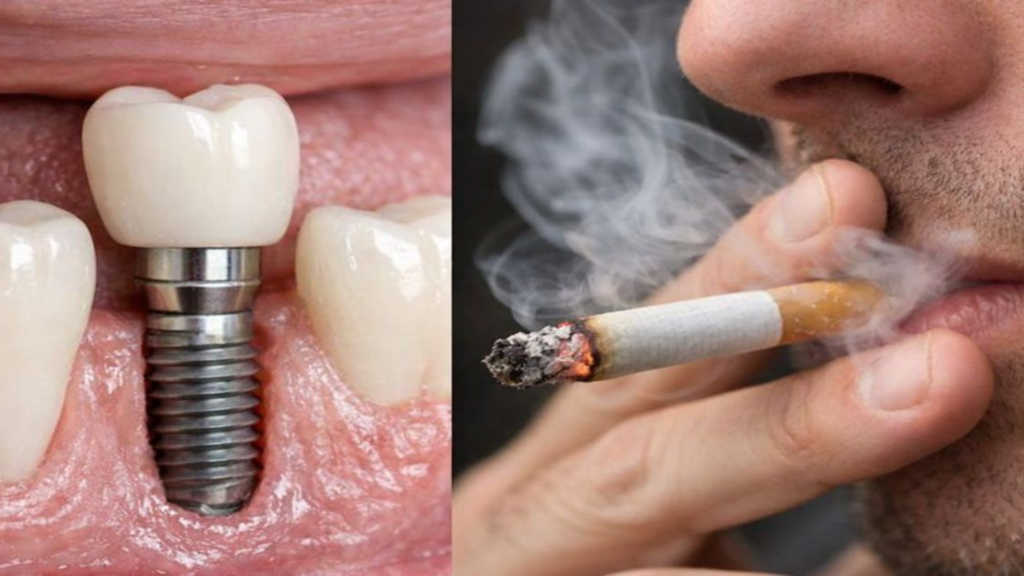
If you’ve been told, or assumed, that smoking, diabetes, or another health condition disqualifies you from dental implants, you’re not alone. It’s one of the most common reasons people delay or avoid a consultation entirely.
Here’s the truth: most health conditions don’t automatically disqualify you from dental implants. They change the conversation, and sometimes the approach, but they rarely close the door. What matters is honest communication with an experienced implant dentist who understands how to manage these factors.
This guide covers the most common health conditions patients ask about, how each one affects implant treatment, and what your dentist needs to know to give you the best possible outcome. For a broader look at who qualifies, see our guide to signs you’re a good dental implant candidate.
Smoking and Dental Implants
Smoking is the most-discussed risk factor in implant dentistry, and for good reason. It genuinely affects healing. But “higher risk” does not mean “can’t be done.”
How Smoking Affects Implants
Nicotine constricts blood vessels, reducing blood flow to the surgical site. Less blood flow means less oxygen and fewer nutrients reaching the area where the implant needs to integrate with bone. This slows healing and increases the risk of implant failure.
Research shows that smokers have an implant failure rate roughly 2–3 times higher than non-smokers, but even among smokers, the overall success rate remains above 85–90%. That means most smokers who receive implants still have successful outcomes.
What Your Dentist Needs You to Do
- Quit or reduce smoking before surgery. Most implant dentists recommend stopping at least 2 weeks before and 8 weeks after surgery. The longer you can stop, the better your outcome.
- Be honest about your habit. The number of cigarettes per day, how long you’ve smoked, and whether you’re willing to stop matters for surgical planning.
- Understand the trade-off. Smoking doesn’t disqualify you, but it does reduce your success rate. An experienced dentist can factor this into the treatment plan, potentially using additional implants, adjusting the timeline, or recommending bone grafting to compensate.
Vaping and Dental Implants
Vaping delivers nicotine without the tar and combustion byproducts of cigarettes, but nicotine itself is the primary concern for implant healing. If you vape, the same guidance applies: stop before and after surgery if possible, and be transparent with your dentist.
Diabetes and Dental Implants
Diabetes is the second most common concern patients raise, and the answer is encouraging for most people.
How Diabetes Affects Implants
Diabetes, particularly when poorly controlled, impairs the body’s ability to heal and fight infection. Elevated blood sugar levels slow wound healing, reduce immune function, and can compromise osseointegration (the process of the implant fusing with bone).
However, the key factor is blood sugar control, not the diagnosis itself.
Well-Controlled Diabetes: Green Light
Patients with well-controlled Type 2 diabetes (HbA1c below 7–8%) have implant success rates that are comparable to non-diabetic patients. Multiple studies confirm this. If your diabetes is managed with medication, diet, and regular monitoring, you are generally a good candidate for dental implants. To see how long results typically hold up, read how long dental implants last.
Poorly Controlled Diabetes: Caution, Not Necessarily a No
If your HbA1c is above 8%, your implant dentist will likely recommend working with your physician to improve blood sugar control before proceeding. This isn’t a permanent disqualification. It’s a timing decision. Getting your levels down first gives your implants the best chance of success.
What Your Dentist Needs to Know
- Your most recent HbA1c level
- What medications you take (metformin, insulin, etc.)
- Whether your blood sugar has been stable or fluctuating
- Your endocrinologist or primary care doctor’s contact information (for coordination)
Heart Disease and Blood Pressure
Patients with cardiovascular conditions often assume they can’t undergo any surgical procedure. In most cases, dental implant placement is safe, but coordination with your cardiologist is essential. If you’re curious what the surgery itself involves, here’s the dental implant procedure step by step.
High Blood Pressure
Controlled high blood pressure (managed with medication) is generally not a barrier to implant surgery. Uncontrolled hypertension may require stabilization first, as it increases bleeding risk during surgery.
Blood Thinners
If you take blood thinners (warfarin, Eliquis, Plavix, aspirin), your implant dentist and cardiologist will coordinate on whether to adjust your medication around the surgery. In many cases, implant placement can proceed with minor adjustments.
Heart Conditions Requiring Antibiotic Prophylaxis
Certain heart conditions (prosthetic heart valves, history of endocarditis, some congenital heart defects) require preventive antibiotics before dental procedures. This is standard protocol, and your dentist will prescribe the appropriate antibiotic before your implant surgery.
Osteoporosis
Osteoporosis affects bone density throughout the body, which naturally raises questions about dental implants that integrate with bone.
The Good News
Jawbone density is different from hip or spine density. Most patients with osteoporosis have sufficient jawbone quality to support dental implants successfully. Studies consistently show high implant success rates in osteoporosis patients. If bone is a concern, our article on getting implants with bone loss explains your options.
Bisphosphonate Medications (Fosamax, Boniva, Reclast)
The more important consideration is bisphosphonate medications used to treat osteoporosis. Long-term use of these drugs (especially intravenous forms) is associated with a rare condition called medication-related osteonecrosis of the jaw (MRONJ). Your dentist will need to know:
- Which bisphosphonate you take
- Whether it’s oral or intravenous
- How long you’ve been taking it
- Your prescribing doctor’s contact information
In most cases, implants are still possible, but timing and coordination with your physician may be needed.
Autoimmune Conditions
Conditions like rheumatoid arthritis, lupus, and Sjogren’s syndrome involve immune system dysfunction that can theoretically affect healing. In practice, most patients with well-managed autoimmune conditions receive dental implants successfully.
The considerations are:
- Immunosuppressive medications (methotrexate, biologics) may need temporary adjustment around surgery, always in coordination with your rheumatologist.
- Sjogren’s syndrome causes dry mouth, which increases infection risk around implants long-term. Extra attention to oral hygiene and more frequent dental check-ups help manage this.
Age: Too Young or Too Old?
“Am I Too Old for Implants?”
There is no upper age limit for dental implants. Patients in their 70s, 80s, and even 90s receive implants regularly with excellent outcomes. What matters is your overall health status, not your birth certificate. If you’re healthy enough for a tooth extraction, you’re generally healthy enough for an implant.
“Am I Too Young?”
Dental implants should not be placed until jaw growth is complete, typically around age 17–18 for females and 18–21 for males. A growing jaw can cause an implant to shift out of alignment.
The Conditions That Rarely Disqualify, But Require Planning
| Condition | Impact on Implants | What’s Needed |
|---|---|---|
| Smoking | Higher failure risk; slows healing | Quit/reduce before and after surgery |
| Type 2 Diabetes (controlled) | Minimal impact | Recent HbA1c, physician coordination |
| Type 2 Diabetes (uncontrolled) | Higher risk | Improve control first, then proceed |
| High blood pressure (controlled) | Minimal impact | Continue medication as directed |
| Blood thinners | Bleeding management | Cardiologist coordination |
| Osteoporosis | Usually minimal impact | Bisphosphonate medication review |
| Autoimmune conditions | May affect healing | Rheumatologist coordination, medication timing |
| Advanced age (70+) | Not a barrier | General health assessment |
What Actually Disqualifies Someone?
Very few conditions are absolute disqualifiers. The short list:
- Active cancer treatment (radiation to the jaw area or chemotherapy): implants are typically delayed until treatment is complete and healing capacity returns.
- Uncontrolled systemic disease: any condition that is actively unmanaged and severely impairs healing.
- Severe immunosuppression: such as unmanaged HIV/AIDS or organ transplant anti-rejection doses that cannot be adjusted.
- Active IV bisphosphonate therapy: higher risk of jaw complications; requires specialist evaluation.
Even these aren’t permanent. Most patients become candidates once the underlying condition is stabilized or treatment is complete.
The Most Important Factor: An Experienced Implant Dentist
The difference between “you can’t have implants” and “here’s how we’ll do it safely” often comes down to your dentist’s experience. A fellowship-trained implant specialist like Dr. Rushabh Doshi evaluates your full medical history, coordinates with your physicians, and adjusts the treatment plan to account for your specific health profile. Not sure what to look for? Here’s how to choose an implant dentist in DFW.
With over 5,000 implants placed and a 97% success rate, Dr. Doshi has treated patients with diabetes, heart conditions, osteoporosis, and autoimmune conditions, successfully.
Get Your Personalized Risk Assessment
The only way to know whether your health condition affects your implant candidacy is a one-on-one evaluation. At SmileOn, your consultation includes:
- A full medical history review
- A Cone-Beam CT scan (3D imaging of your jawbone)
- Coordination with your physician if needed
- An honest assessment of your candidacy and any steps to optimize your outcome
And the consultation is free. Worried about discomfort? Read Do dental implants hurt, and how sedation works.
Book your free consultation or call (682) 563-5663.
SmileOn Locations:
- Mansfield: 3550 East Broad Street, Suite 112, Mansfield, TX 76063
- Arlington: 4010 N Collins St #104, Arlington, TX 76005
- Irving: 2932 N. Belt Line Rd., Irving, TX 75062
Frequently Asked Questions
Can you get dental implants if you have diabetes? Yes. Patients with well-controlled Type 2 diabetes (HbA1c below 7–8%) have implant success rates comparable to non-diabetic patients. If your diabetes is not well-controlled, your dentist may recommend improving your blood sugar levels first.
Can smokers get dental implants? Yes, but smoking increases the risk of implant failure by 2–3 times. Most implant dentists recommend quitting at least 2 weeks before and 8 weeks after surgery. Even among smokers, success rates remain above 85–90%.
Does high blood pressure prevent you from getting dental implants? Controlled high blood pressure is generally not a barrier. If your blood pressure is uncontrolled, your dentist may recommend stabilizing it before surgery.
Can you get implants if you take blood thinners? In most cases, yes. Your implant dentist and cardiologist will coordinate to manage bleeding risk, which may involve adjusting your medication around the procedure.
Is there an age limit for dental implants? There is no upper age limit. Patients in their 70s, 80s, and 90s receive implants successfully. The minimum age is typically 17–21, once jaw growth is complete.
Can you get dental implants with osteoporosis? Yes. Most osteoporosis patients have sufficient jawbone quality for implants. The main consideration is bisphosphonate medications, which may require coordination with your physician. More answers are in our dental implant FAQs.